
Featured
3 Essential Cognitive Strategies for the Back-to-School Transition: Preparing Your Child's Mind for the New Term
The transition from the unstructured freedom of summer break to the structured rhythm of school—with its schedules, homework, and rules—presents a significant cognitive adjustment for a child's brain. The shift in routine and time perception often manifests during the first few weeks of school as difficulty sustaining attention, rapid cognitive fatigue, or reluctance to attend school. How can we help children navigate this transitional period smoothly and effectively?

Latest Articles

Game Mechanics Supporting Cognitive Development in Sessions: Goal-Oriented Applications
In developmental support processes, gamification not only increases motivation but also provides a structured foundation for supporting specific cognitive functions in a quantifiable way. For the game mechanics utilized in sessions to serve a clinical or educational purpose, they must target specific goals (e.g., visual discrimination, auditory processing, executive functions) tailored to the client's needs. Particularly in face-to-face single-device (shared screen) or online sessions, properly selected game mechanics provide the practitioner with direct behavioral data.
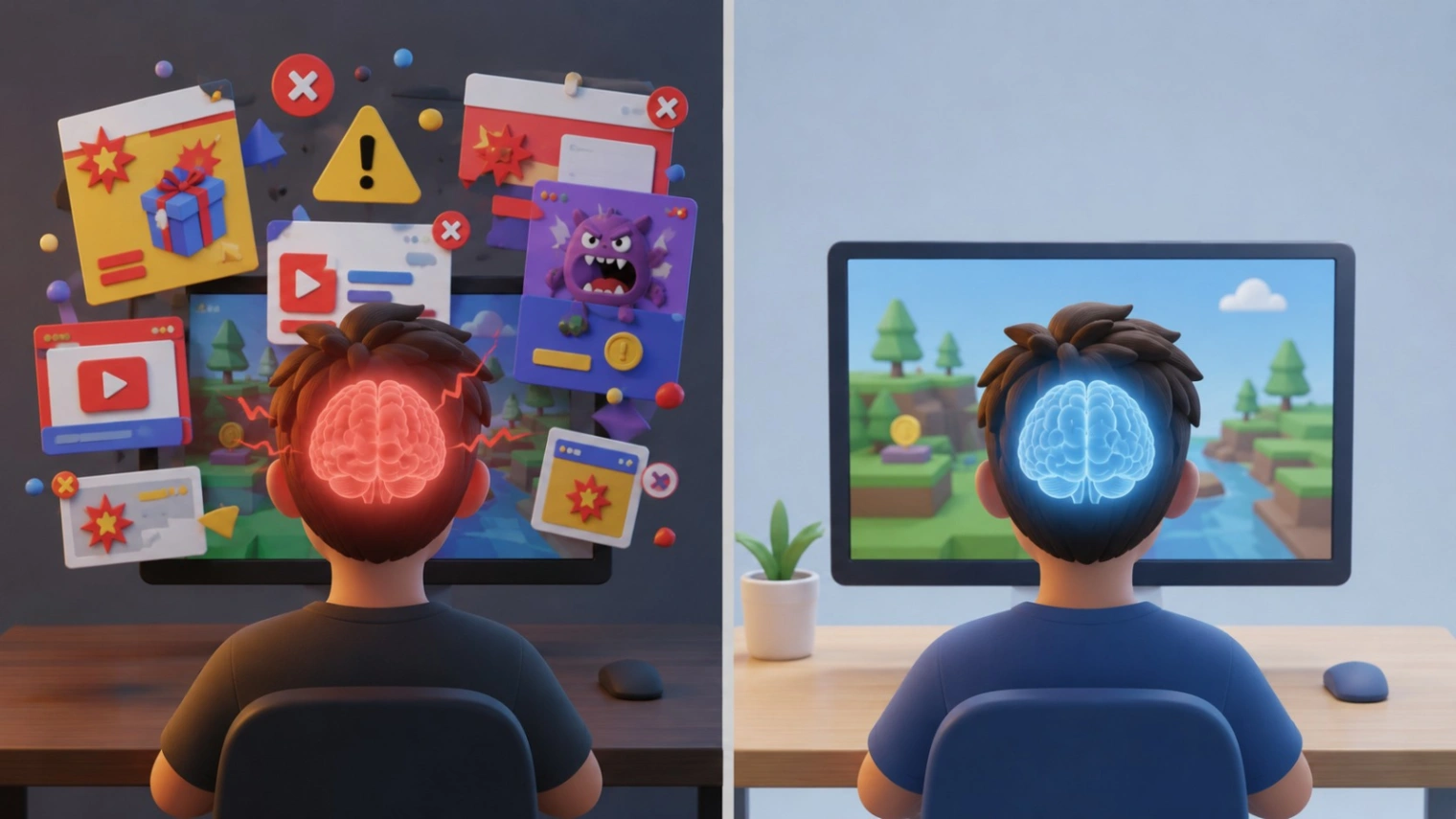
Visual Clutter and Cognitive Load: The Importance of an Ad-Free and Minimalist Digital Environment in Sessions
As digital tools become an integral part of sessions, the interface design of the utilized platform is frequently overlooked. The visual density and advertisements on standard web platforms can directly impact the participant's engagement in the process. What, then, is the therapeutic significance of "calmness" in an interface?

Overcoming Therapeutic Resistance in Sessions: The Clinical Power of Customizable Activities
One of the most frequent challenges practitioners face in developmental interventions is that rigid, standardized materials often fail to meet the unique needs of every participant. Each participant's cognitive profile, interests, and areas of difficulty are as unique as a fingerprint. Therefore, a successful intervention plan is built not with static materials, but with flexible, dynamic tools that the practitioner can mold to fit their specific clinical objectives. How does customizing session content according to the participant's profile transform the therapeutic process and intrinsic motivation?

The Cognitive Foundations of Social Skills in Clinical Sessions: Joint Attention and Inhibitory Control
When discussing social skills, extroverted behaviors such as peer relations, maintaining eye contact, or integrating into a group typically come to mind. However, the background of healthy social interaction relies on specific individual cognitive skills: joint attention, inhibitory control, and cognitive flexibility. So, how can we observe the fundamental building blocks of social cognition within our sessions and support them with quantifiable data?

Mathematical Reasoning: Scaffolding Problem-Solving Skills in Clinical Practice
Although often narrowly associated with numbers and basic arithmetic, mathematical reasoning is actually one of the most fundamental building blocks of cognitive development. Complex processes such as establishing logical connections between events, organizing available data, sequential planning, and strategy formulation all fall under this cognitive umbrella. As a practitioner, scaffolding a participant's problem-solving skills while tracking their progress through objective data is a critical step. So, how can we most effectively observe mathematical reasoning and executive functioning during our sessions?

Auditory Processing and Sustained Attention in Clinical Sessions: Target-Driven Interventions for Professionals
Assessing and supporting cognitive skills is one of the most fundamental aspects of a skill-oriented practitioner's work. Today, when profiling a participant's cognitive abilities, professionals require more than just clinical observation; they need real-time, quantifiable data. Core domains, particularly auditory processing, sustained attention, and logical reasoning, are central to the architecture of every session. So, how can practitioners efficiently monitor a participant's attention and processing skills while keeping the therapeutic process dynamic and engaging?